Job tracking in an embroidery or print shop means knowing where every order is, and who has it, without walking to the machine or the shelf to look. It works best when artwork approval is a stage of its own and every job has a named person against it.
What does a job go through in an embroidery or print shop?
A typical embroidery job moves from quote to artwork, proof and approval, then on to garment ordering, the machine, finishing and collection.
The quote is priced on the garments and the decoration. For embroidery that usually means stitch count and positions, plus a one-off digitising charge for a new logo. For print it means the print method, colours and size.
Where do embroidery and print jobs usually stall?
Jobs usually stall, or go wrong, at a handover.
- The proof. The approval comes back in an email reply that can get buried, and the job sits at “awaiting sign-off”.
- The garments. A short delivery or a back order from the wholesaler can go unnoticed until the job is due on the machine.
- The run sheet. When the approved proof and the run sheet live in different places, the machine can sew a version the customer never signed off.
- The shelf. Finished orders wait in bags, and who has been told lives in someone’s head.
Why should artwork approval be its own stage?
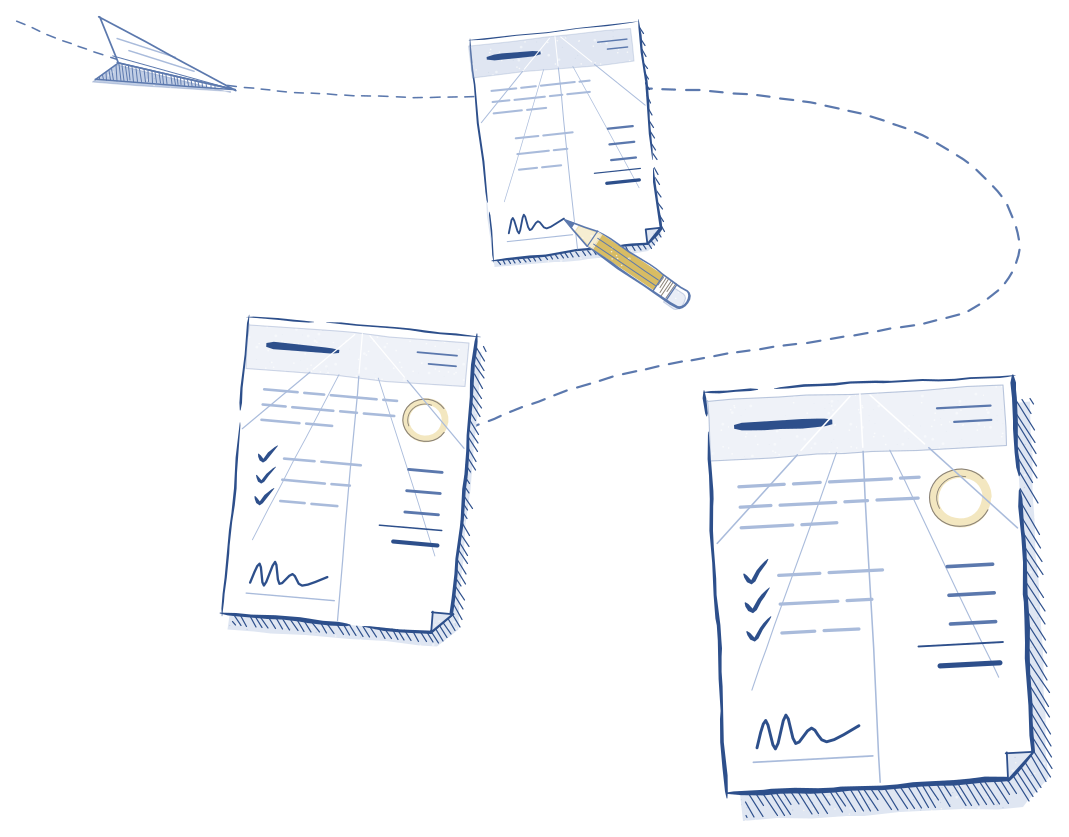
The approved proof is the customer’s sign-off on what will be made, so nothing should be ordered or sewn before it.
A proof shows size, position, colours and spelling. It might be a mock-up, a stitch simulation or a sewn sample. A screen proof cannot show the exact thread or ink colour, so it is worth saying so on the proof.
When approval is a stage on the job, everyone can see which jobs are still waiting for it. A repeat order reuses the stitch file, so the same logo can usually skip digitising.
What does tracking one order look like?
It looks like one record moving through your stages, with its status current at every step. Here is one order, as an example with invented data.
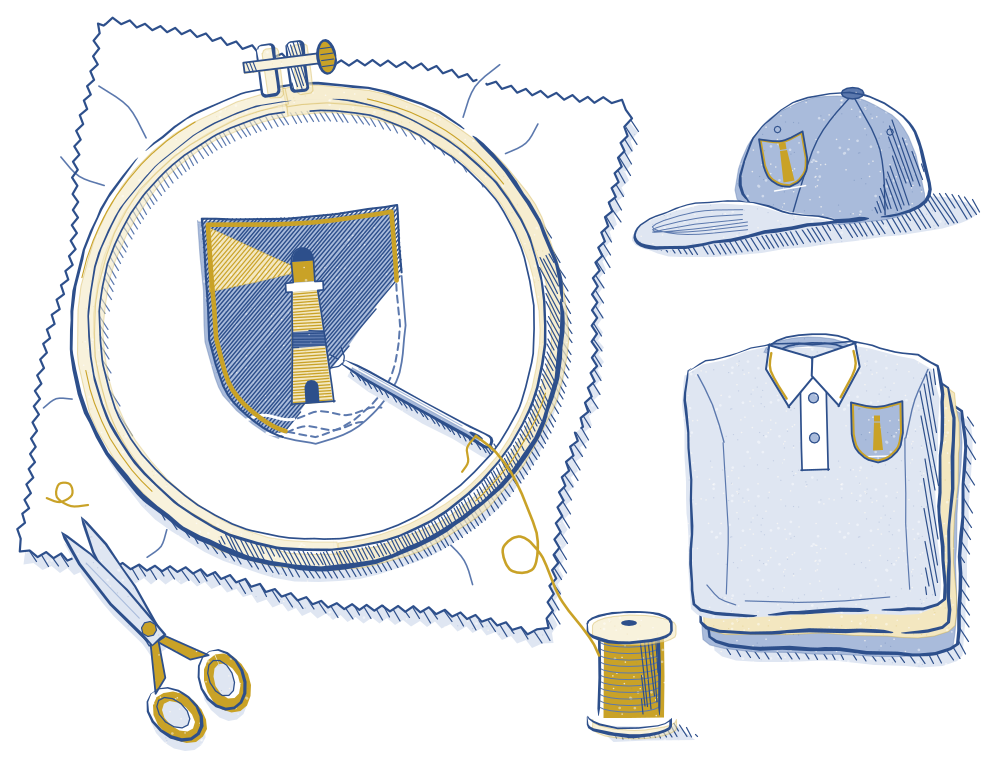
- Quote Q-0318. Northfield Workwear asks for 30 polo shirts with a left chest logo, sizes S to XL. The quote covers garments, stitch count and a digitising charge.
- Order #1042. The quote is accepted and becomes the order. Sizes and colours carry over.
- Artwork check. The logo arrives as a low-resolution image, so it is redrawn and digitised. The proof goes out and the job shows “awaiting sign-off”.
- Approved. The customer signs off the proof in writing.
- Garments ordered. Blanks go to the wholesaler on a purchase order. Two XL shirts are short, so the job shows “waiting on garments” until they arrive.
- On the machine. The job is assigned to a named embroiderer and shows “on the machine”.
- Ready. The shirts are trimmed, pressed, counted against the order and bagged by size.
- Collected and invoiced. The order is marked as collected. The invoice is raised from the order, with the payment recorded against it.
At any point, whoever answers the phone can say where order #1042 is.
Can a spreadsheet or whiteboard do this?
For one or two people and a handful of orders, often yes.
As the shop grows, the gaps show. A spreadsheet does not know that a job needs approval before production, so it relies on people remembering. Details get retyped into the quote, job sheet and invoice, and each copy can drift. Nothing chases a late job unless someone looks. There is a fuller comparison in BruceHQ and spreadsheets.
How does BruceHQ track embroidery and print jobs?
BruceHQ keeps each order as one record from quote to collection, with your stages named in your words.
Artwork verification sits before production as a stage of its own. Each job has a named person against it and a live status. Purchase orders for blanks are raised and tracked in the same place. Digitising stays where it is now, in your own program or with your digitiser. It is job management and order management, configured around the way your shop already works.
An Aberdeen embroidery company, our proof-of-concept customer and first subscriber, runs its quotes, orders, production, invoicing and collection on BruceHQ, with jobs assigned to named embroiderers. See how it fits embroidery, print and workwear shops and how production and jobs work.
What should you do next?
Write down the stages your last order went through, from enquiry to collection, and mark where it waited. Then book a free workflow call and we will map it with you.